

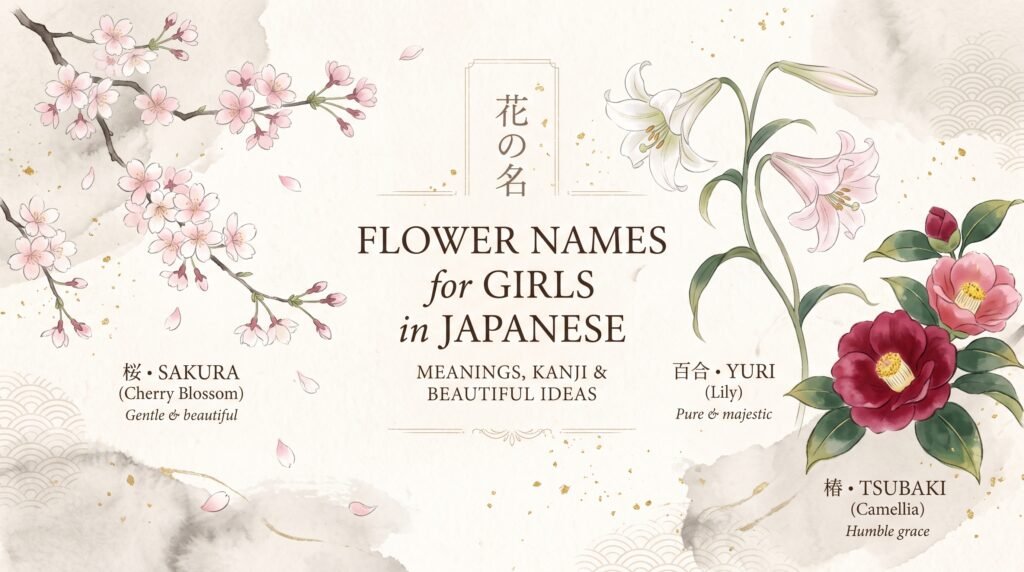
In Japan, flowers are more than decoration. They mark the seasons, appear in poetry and festivals, and carry quiet messages about love, courage, and renewal. It is no surprise that Japanese parents have turned to blossoms for baby names for centuries. A flower name gives a girl a gentle image to carry through life, and in Japanese it often comes with a layered meaning that English names rarely match.
If you are searching for flower names for girls in Japanese, this guide is for you. You will find classic choices, seasonal picks, rare gems, and modern combinations, each with its kanji, pronunciation, and meaning. Whether you are naming a daughter, a character in your story, or a beloved pet, there is something here for you.
If you enjoy exploring names from other cultures too, you can browse more ideas on Name Enchant, including our guides to flower names with meanings and French girl names.
Why Japanese Flower Names Are So Special
Japanese names are written in kanji, characters that each carry their own meaning. This means one flower name can be written in several ways, and each version gives the name a slightly different feel. The name “Sakura” can be written with the character for cherry blossom, or in soft hiragana for a more modern look. Parents often choose the writing that best matches their hopes for the child.
Flowers also hold a special place in Japanese culture. The tradition of hanami, or flower viewing, brings families and friends together under blooming cherry trees every spring. There is also hanakotoba, the Japanese language of flowers, in which each bloom represents a feeling or virtue. A name drawn from a flower borrows all of that meaning.
Finally, floral names tend to sound soft and musical. Many end in vowels, which gives them a flowing, gentle rhythm that is easy to pronounce in almost any language. That is one reason Japanese flower names have become popular far beyond Japan.
Quick Reference Table: Popular Japanese Flower Names
| Name | Kanji | Flower | Meaning |
|---|---|---|---|
| Sakura | 桜 | Cherry blossom | Beauty, renewal, fleeting life |
| Hana | 花 | Flower | Blossom, simple beauty |
| Yuri | 百合 | Lily | Purity, elegance |
| Ume | 梅 | Plum blossom | Perseverance, hope |
| Momo | 桃 | Peach blossom | Sweetness, good fortune |
| Kiku | 菊 | Chrysanthemum | Nobility, longevity |
| Ran | 蘭 | Orchid | Refinement, grace |
| Himawari | 向日葵 | Sunflower | Devotion, brightness |
| Ayame | 菖蒲 | Iris | Good news, courage |
| Tsubaki | 椿 | Camellia | Modesty, steadfast love |
Classic Japanese Flower Names for Girls
These names have been loved for generations. They are widely recognized in Japan and easy for international families to pronounce.
Sakura (桜). The cherry blossom is the national symbol of Japan, and Sakura is perhaps the most famous floral name in the country. It stands for the beauty of life and the idea that everything is precious because it is temporary. Variations include Sakurako and Sakuno.
Hana (花). Simply meaning “flower,” Hana is short, sweet, and timeless. It also works well as a base for longer names such as Hanako, Hanae, and Hanano.
Yuri (百合). This name means “lily.” In Japan, the lily is linked with purity and grace. Sayuri, meaning “small lily,” is another lovely option and became familiar worldwide through literature and film.
Ume (梅). The plum blossom opens in late winter, while snow may still be on the ground. Because of this, Ume represents resilience and hope in hard times. It is an old-fashioned name that is now seen as charming and distinctive.
Momo (桃). Meaning “peach,” Momo is associated with the peach blossom festival and good fortune. It is playful, cheerful, and very easy to say.
Kiku (菊). The chrysanthemum is deeply tied to Japanese heritage and is the flower of the imperial family. Kiku carries a sense of dignity and long life.
Ran (蘭). This short name means “orchid.” It sounds modern and sleek, yet it has deep roots in East Asian tradition, where orchids symbolize refinement.
Seasonal Flower Names
Japan celebrates four distinct seasons, and many parents choose a name to match the season of their daughter’s birth. Here are some ideas for each.
Spring Flower Names
Spring is the season of new beginnings, which makes it the most popular for flower names.
- Sakura (桜): cherry blossom
- Momo (桃): peach blossom
- Fuji (藤): wisteria, a hanging cluster of purple flowers
- Sumire (菫): violet, meaning modest and sincere
- Tanpopo (蒲公英): dandelion, a cheerful and unusual choice
- Nanohana (菜の花): rapeseed blossom, a bright yellow spring flower
Summer Flower Names
Summer names feel bright and full of energy.
- Himawari (向日葵): sunflower, symbolizing loyalty and warmth
- Ayame (菖蒲): iris, linked with courage and good tidings
- Hasu (蓮): lotus, a sign of purity rising from muddy water
- Asagao (朝顔): morning glory, a flower that opens at dawn
- Ajisai (紫陽花): hydrangea, a favorite during the rainy season
- Suzuran (鈴蘭): lily of the valley, meaning “little bell orchid”
Autumn Flower Names
Autumn names tend to feel elegant and calm.
- Kiku (菊): chrysanthemum
- Kosumosu (秋桜): cosmos, literally “autumn cherry blossom”
- Hagi (萩): bush clover, a classic autumn flower in Japanese poetry
- Kikyo (桔梗): bellflower, representing everlasting love
- Shion (紫苑): aster, often described as “remembrance” and a strong choice for a quiet, thoughtful girl
Winter Flower Names
Winter flowers symbolize strength, because they bloom when the world is cold.
- Tsubaki (椿): camellia, which blossoms in winter
- Ume (梅): plum blossom
- Botan (牡丹): peony, known as the “king of flowers”
- Suisen (水仙): narcissus, a fragrant winter bloom
Rare and Unique Japanese Flower Names
If you want something that will stand out, these less common names are worth a look.
Nadeshiko (撫子). This name refers to the dianthus, or “pink,” flower. In Japan, it is tied to the ideal of a gentle yet strong woman, which is why the phrase “Yamato Nadeshiko” describes the traditional picture of Japanese femininity. It is a bold, meaningful choice.
Fujiko (藤子). Built from the wisteria flower plus the common suffix “ko,” meaning child, this name feels vintage and graceful.
Ayame (菖蒲). Although iris names appear in many cultures, Ayame has a special beauty in Japanese because the iris is believed to ward off evil.
Renka (蓮華). This means “lotus flower” and has a spiritual, peaceful sound. It is rare and elegant.
Kaede (楓). Strictly speaking, this refers to the maple, not a flower, but it is so often grouped with floral and nature names that many parents consider it in the same family.
Shirayuki (白百合). Meaning “white lily,” this is a graceful and uncommon pick.
Kasumiso (霞草). The name for baby’s breath, delicate and light, though used mainly as an artistic or fictional name.
Modern Japanese Flower Names
Modern Japanese parents often combine a flower character with another meaningful character, or write the name in hiragana for a softer look. Here are some popular modern styles.
Names that use “Hana” (花). Hanano, Hanon, Hanae, Kaho, and Hanami all use the flower character. They keep the floral meaning while sounding fresh.
Names that end in “-ka” (花). In this pattern, the flower character comes last. Examples include Haruka (spring flower), Natsuka (summer flower), Akika (autumn flower), and Mika (beautiful flower). These are especially useful if you want to indicate a season.
Names that end in “-ka”mean fragrance (香). Sayaka and Kaoruko involve scent, a quiet way of referencing blooms.
Names with “Sakura” extensions. Sakurako, Sakuya, and Sakurano feel gentle and are well suited to girls born in spring.
Short names for global families. If you live outside Japan, short names such as Hana, Yuri, Momo, Ume, and Ran are easy to spell and say anywhere in the world.
Japanese Flower Names for Middle Names
Many families outside Japan like to use a Japanese flower name as a middle name to honor heritage without making everyday use difficult. Options that pair well with Western first names include Hana, Sumire, Yuri, and Ayame. For example, “Emily Sakura” or “Olivia Hana” feels balanced and meaningful. If you love flowers from other places too, our guide to elegant names inspired by flowers, gardens, and nature offers more ideas.
Tips for Choosing the Right Japanese Flower Name
Picking a name is a big decision, so take your time. These tips can help.
Check the kanji carefully. The same sound can be written with different characters that have different meanings. Always confirm which characters you are using, ideally with a native speaker or a reliable reference on Japanese names.
Think about pronunciation. Japanese vowels are short and clear. “Sakura” is sah-koo-rah, and “Yuri” is yoo-ree. If the name will be used in an English-speaking country, practice saying it aloud and imagine the teacher calling it at school.
Consider the season. A name that matches the birth month adds a personal story. A baby born in March might be a natural Sakura or Momo, while a baby born in July could be Himawari.
Think about the nickname. Long names often get shortened. Himawari might become “Hima” or “Mari,” and Sakura might become “Saku.” Make sure you like the nicknames too.
Respect the culture. Using a Japanese name is a lovely tribute, but it helps to learn what it truly means and how it is used. Reading about traditions through trusted sources such as Japan’s official travel guide can deepen your understanding of the flowers behind the names.
Frequently Asked Questions
What is the most popular Japanese flower name for girls? Sakura, meaning cherry blossom, is among the best-known. Hana, Yuri, and Himawari also rank highly among families who choose floral names.
What does Hana mean in Japanese? Hana means “flower” or “blossom.” It is one of the simplest and most widely loved flower names in Japan.
Are Japanese flower names only for girls? Most are used for girls, but some, such as Hasu or Kiku, can occasionally be given to boys, depending on the kanji. Names ending in “-ko” are almost always feminine.
Can I use a Japanese flower name if I am not Japanese? Yes. Many families around the world choose Japanese names out of love for the language and culture. It is wise to learn the correct pronunciation and meaning first.
Which Japanese flower name means strength? Ume (plum blossom) and Tsubaki (camellia) are strongly linked with perseverance and resilience, since they bloom in cold weather.
What is a rare Japanese flower name for a girl? Nadeshiko, Shirayuki, Renka, and Suzuran are all uncommon but beautiful options that stand out from the crowd.
How do I write a Japanese flower name in kanji? Each name can be written several ways. Always confirm the exact characters you want, because the meaning changes with the writing.
Conclusion
Japanese flower names for girls offer an uncommon blend of beauty, meaning, and cultural depth. From the famous Sakura to the graceful Nadeshiko, each name connects a child to the seasons, to nature, and to centuries of poetry and tradition. Whether you prefer a classic like Hana, a bright summer name like Himawari, or a rare treasure like Shirayuki, the right choice is the one that feels like your daughter.
