

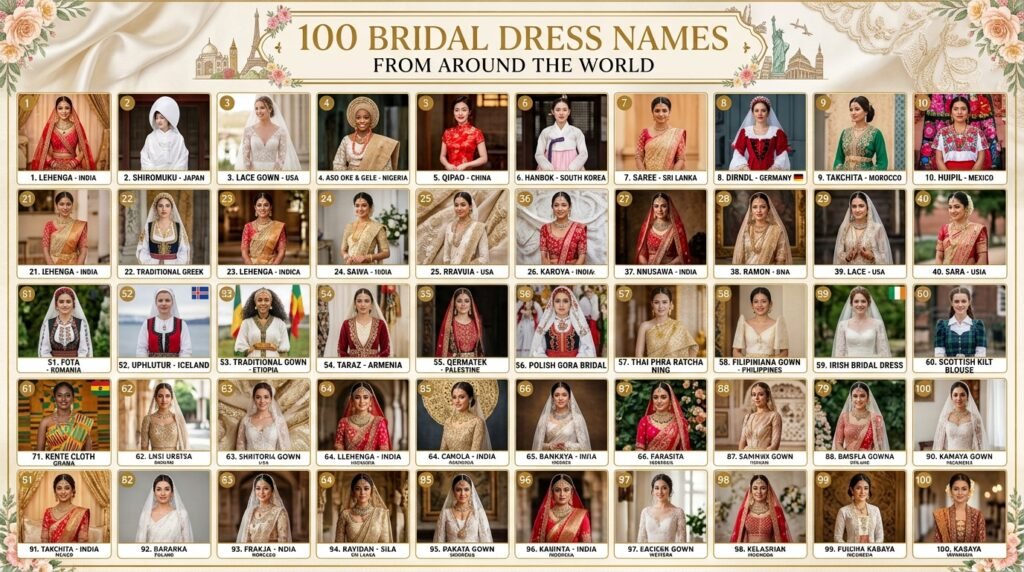
Every culture has its own way of dressing a bride. In one country, she wears fiery red silk stitched with gold; in another, a cloud of white lace; and in another, a handwoven cloth that tells the story of her family. These outfits are more than fashion. They carry history, blessings, and identity.
This guide brings together 100 bridal dress names from every corner of the globe. Whether you are planning your own wedding, designing a collection, writing a story, or simply love learning about world cultures, you will find names, origins, and ideas here. We have grouped the dresses by region so you can travel the world one gown at a time.
Quick Guide: 10 Standout Bridal Dresses by Region
| Dress | Region | Signature Feature |
|---|---|---|
| Lehenga Choli | India | Heavily embroidered skirt, blouse, and dupatta |
| Hanbok | Korea | Vivid colors with graceful, flowing lines |
| Takchita | Morocco | Layered two-piece caftan with rich trims |
| Kente Gown | Ghana | Bold handwoven geometric patterns |
| Qungua | China | Red set with gold dragon and phoenix embroidery |
| Shiromuku | Japan | Pure white kimono symbolizing purity |
| Dirndl Wedding Dress | Germany/Austria | Fitted bodice, apron, and full skirt |
| Pollera | Panama | Layered white skirts with gold ornaments |
| Ao Dai | Vietnam | Slim silk tunic worn over trousers |
| Ball Gown | Western | Fitted bodice with dramatic full skirt |
Bridal Dresses of South Asia
South Asian weddings are famous for color, craftsmanship, and generous embellishment. Red, maroon, and gold dominate, though regional traditions vary beautifully.
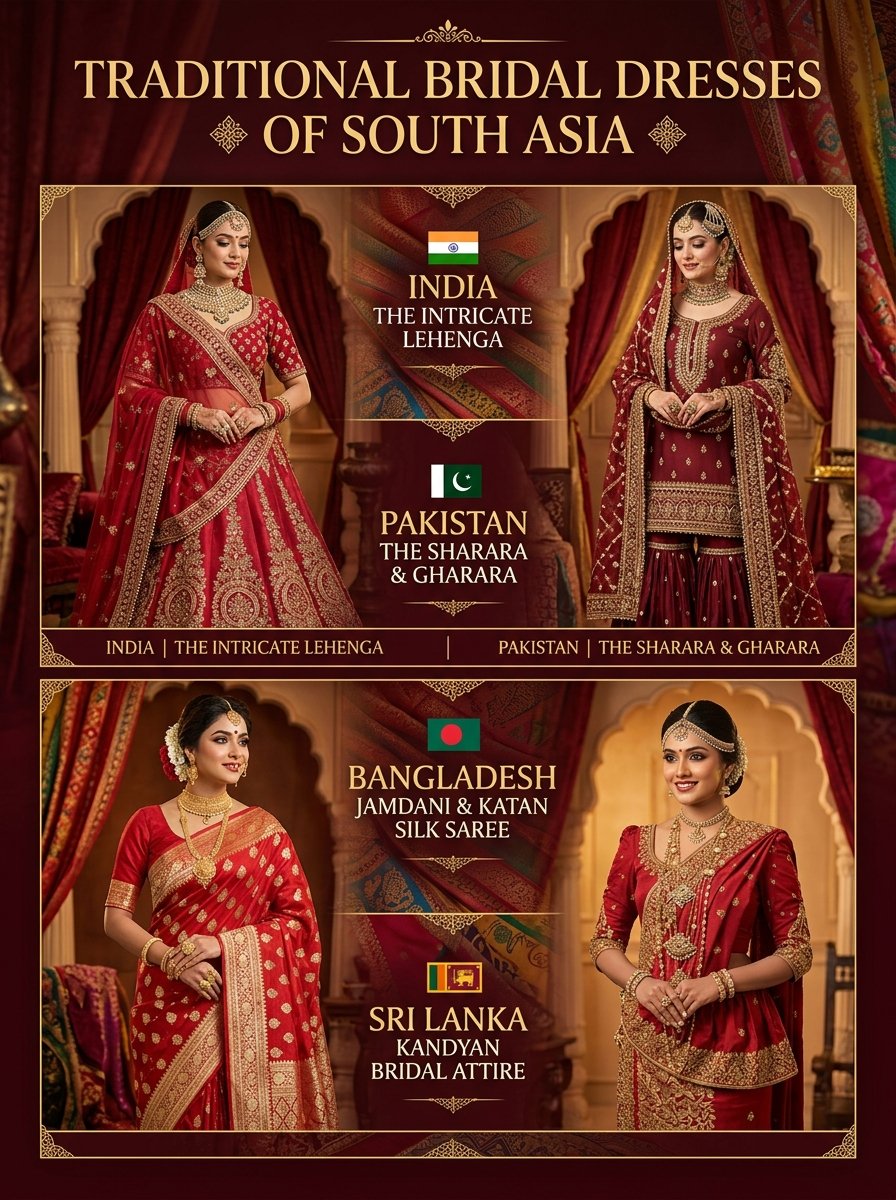
- Lehenga Choli (India): A flared embroidered skirt paired with a fitted blouse and dupatta.
- Sharara (Pakistan/India): Wide-legged, flared trousers with a short kameez, often rich in zardozi.
- Gharara: Knee-length flared bottoms, a graceful style linked to Lucknow and Hyderabad.
- Farshi Gharara: A floor-sweeping version with long, trailing fabric.
- Bridal Anarkali: A long, flowing frock-style gown inspired by Mughal court fashion.
- Banarasi Saree: Silk woven with gold and silver thread in Varanasi.
- Kanjeevaram Saree: Heavy South Indian silk with bold temple borders.
- Paithani Saree: Maharashtrian silk, famous for peacock and lotus motifs.
- Nauvari Saree: A nine-yard drape worn in traditional Maharashtrian weddings.
- Patola Saree (Gujarat): Double-ikat silk, prized for its precise geometric patterns.
- Panetar (Gujarat): A white silk saree with a red border, traditional for Gujarati brides.
- Kasavu Saree (Kerala): Cream cotton or silk with a simple, elegant gold border.
- Baluchari Saree (West Bengal): Silk with mythological scenes woven into the pallu.
- Jamdani Saree (Bangladesh): Fine, airy muslin with intricate woven motifs.
- Kashmiri Pheran: A long, loose gown decorated with delicate tilla embroidery.
- Kandyan Osariya (Sri Lanka): A Sinhalese bridal saree with a fanned pleat at the back.
- Gota Patti Lehenga (Rajasthan): Metallic ribbon appliqué that shimmers with every step.
- Peshwas: A flowing, frock-style bridal gown popular in Pakistani weddings.
Bridal Dresses of the Middle East and North Africa
From the golden caftans of Morocco to the embroidered thobes of Palestine, this region treasures hand embroidery and layered elegance.
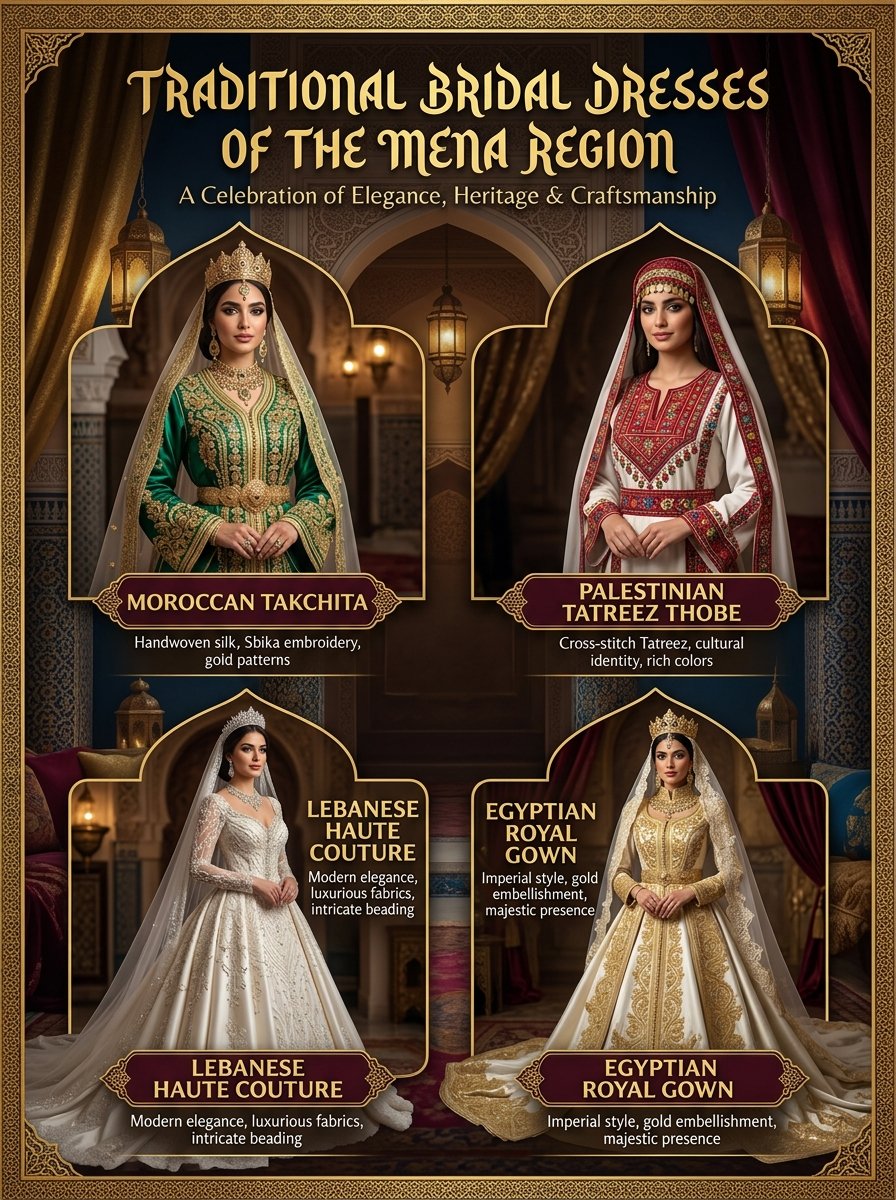
- Takchita (Morocco): A two-piece caftan set, often changed several times during the celebration.
- Berber Bridal Dress (Morocco): Colorful woven fabric paired with bold silver jewelry.
- Thobe al Nashal (UAE): A richly embroidered Emirati bridal dress in gold tones.
- Bindallı (Turkey): A red velvet gown stitched with gold thread, worn on the henna night.
- Palestinian Tatreez Thobe: A cross-stitched dress where every motif carries meaning.
- Siwa Bridal Dress (Egypt): An oasis tradition featuring silver jewelry and detailed embroidery.
- Termeh Bridal Cloth (Iran): Handwoven, patterned fabric used in ceremonial wedding settings.
- Jli Kurdi: A layered, sparkling Kurdish dress in vibrant colors.
- Karakou (Algeria): A velvet jacket embroidered with gold thread over a long skirt.
- Omani Embroidered Dress: Colorful needlework paired with traditional silver ornaments.
- Gulf Dara’a: A loose, decorated dress worn across Gulf communities.
- Bedouin Thobe: Desert-inspired embroidery in striking, symbolic patterns.
Bridal Dresses of Sub-Saharan Africa
African wedding attire celebrates textiles, beads, and storytelling through color.
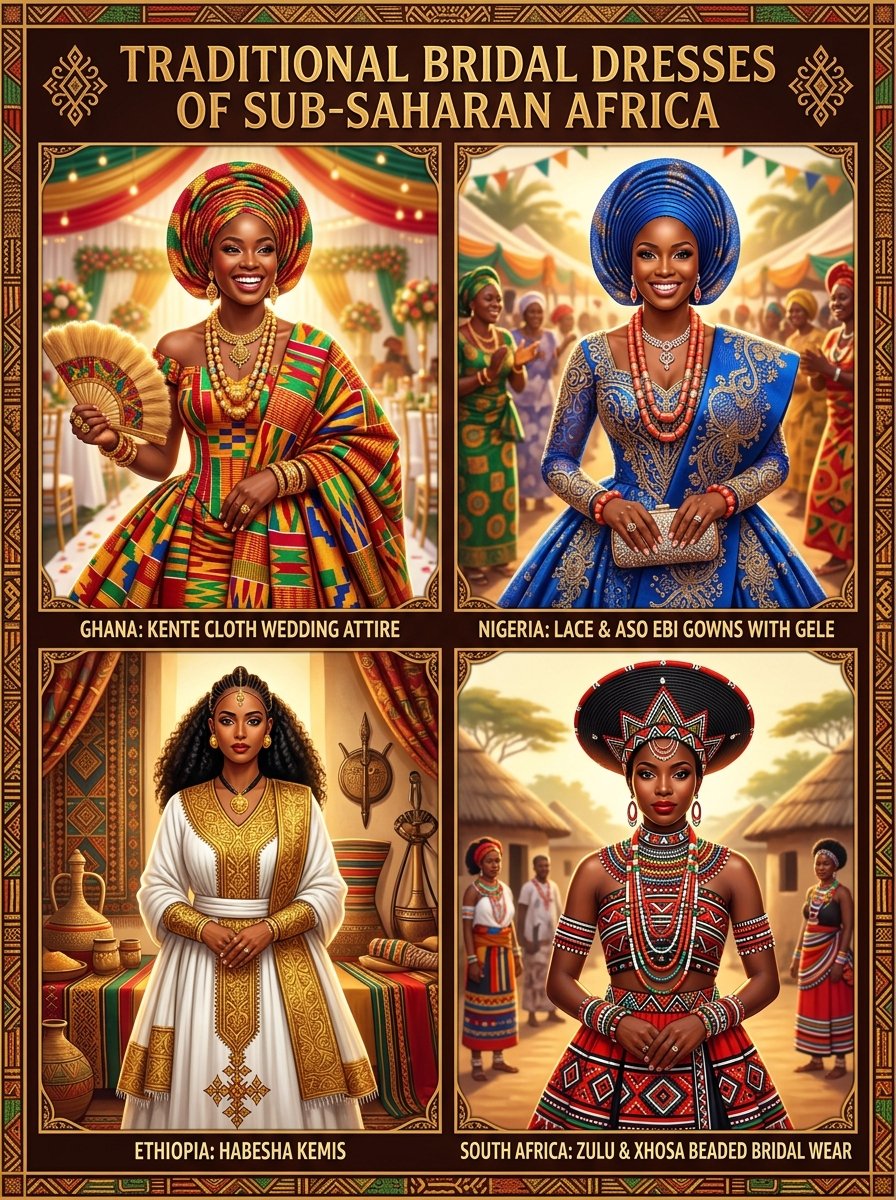
- Kente Gown (Ghana): Bright, handwoven strips of Ashanti cloth with proverb-inspired patterns.
- Aso Oke (Nigeria): A thick, handwoven Yoruba fabric tied or tailored for brides.
- Igbo Wrapper and Coral Beads: Layered cloth with statement coral jewelry.
- Ankara Wedding Dress: Bold wax-print fabric shaped into modern bridal silhouettes.
- Habesha Kemis (Ethiopia/Eritrea): White cotton with a woven decorative border.
- Maasai Beaded Bridal Regalia: Wide beaded collars in symbolic colors.
- Zulu Beaded Bridal Attire: Intricate beadwork where each color has a message.
- Swahili Kanga and Kitenge Attire: Printed coastal fabrics styled for celebrations.
Bridal Dresses of East Asia
East Asian bridal wear is known for symbolism, from phoenixes to purity white.
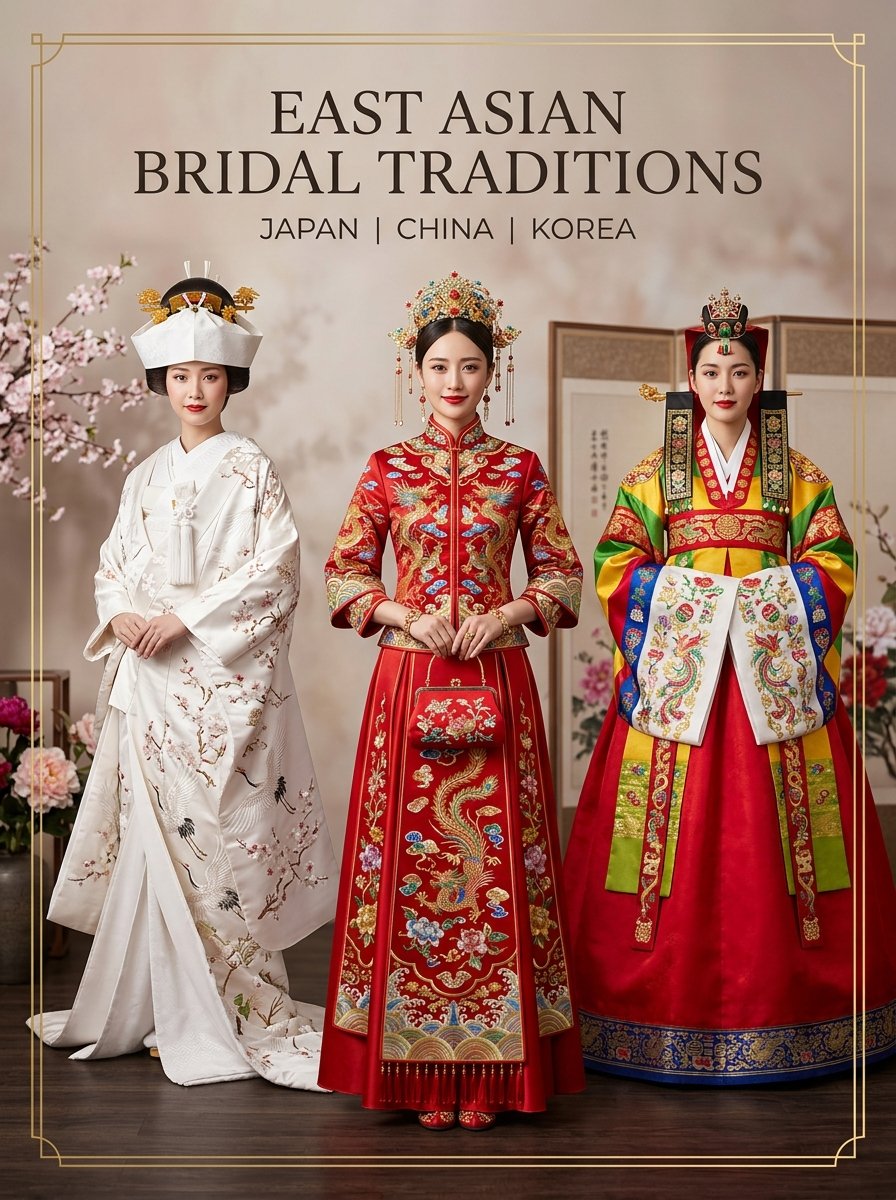
- Qipao (Cheongsam): A fitted silk dress with a high collar, often in red.
- Qungua: A two-piece set embroidered with dragons and phoenixes for luck.
- Xiuhefu: A modern Chinese wedding style with detailed gold embroidery.
- Hanfu Hongyi: Traditional red robes with long, flowing sleeves.
- Hanbok (Korea): A short jacket and full skirt in vivid color.
- Hwarot: An elaborate ceremonial robe once associated with royal weddings.
- Shiromuku (Japan): A pure white kimono symbolizing a fresh start.
- Iro-uchikake (Japan): A colorful, heavily embroidered outer kimono.
- Mongolian Bridal Deel: A silk robe with ornate trims and bold sashes.
- Tibetan Chuba: A wrapped, layered robe worn with turquoise and coral jewelry.
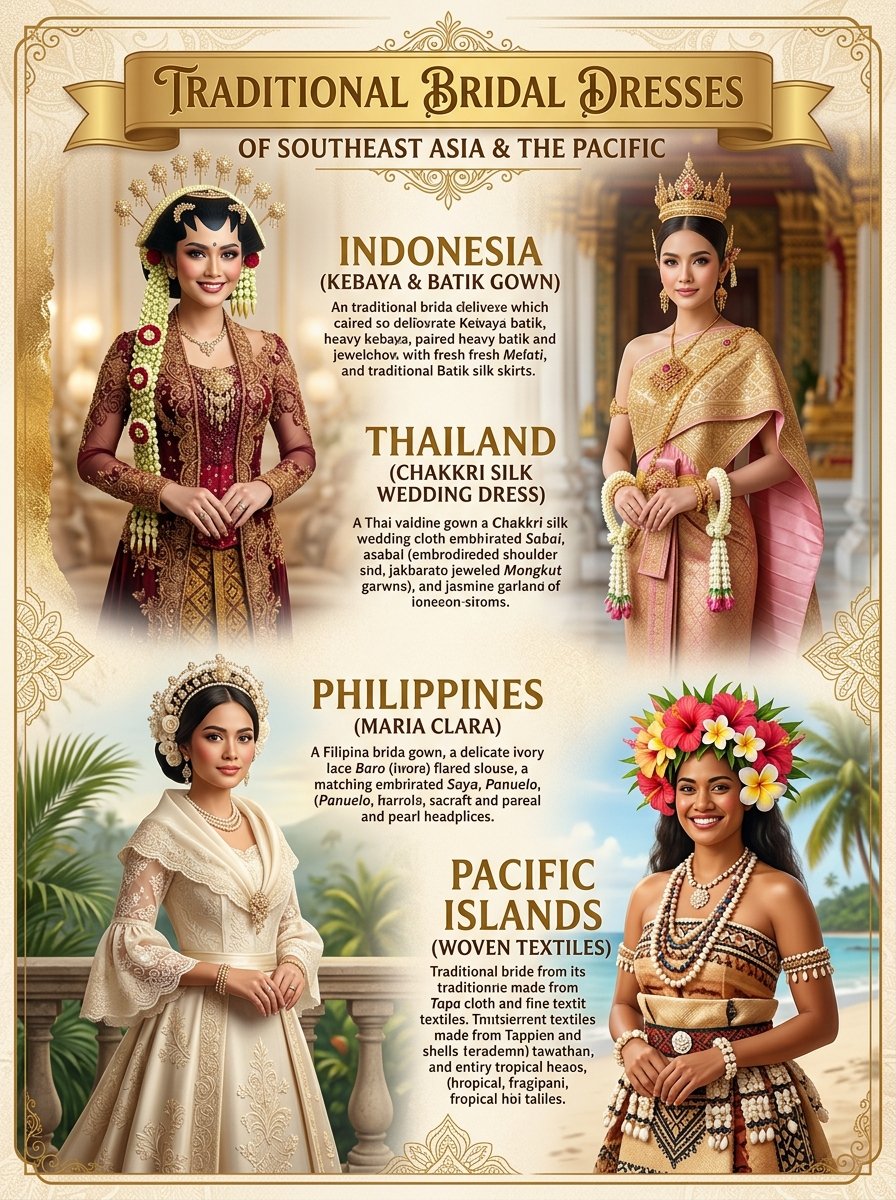
Bridal Dresses of Southeast Asia and the Pacific
Light silks, intricate weaves, and tropical elegance define this region.
- Ao Dai (Vietnam): A silk tunic, often red or gold, paired with a traditional headpiece.
- Baju Kurung (Malaysia): A modest tunic and skirt in rich songket or satin.
- Kebaya: A fitted lace blouse worn with batik or songket wraps.
- Songket Wedding Attire: Handwoven fabric shot through with gold thread.
- Maria Clara Gown (Philippines): A Filipiniana gown with butterfly sleeves.
- Chut Thai (Thailand): A refined silk ensemble inspired by royal tradition.
- Sampot Hol (Cambodia): A silk wrap skirt with a woven pattern.
- Htamein (Myanmar): A wrapped silk skirt paired with a fitted jacket.
- Holoku (Hawaii): A long, flowing gown with a train, often adorned with flowers.
- Puletasi (Samoa): A matching two-piece set with island prints.
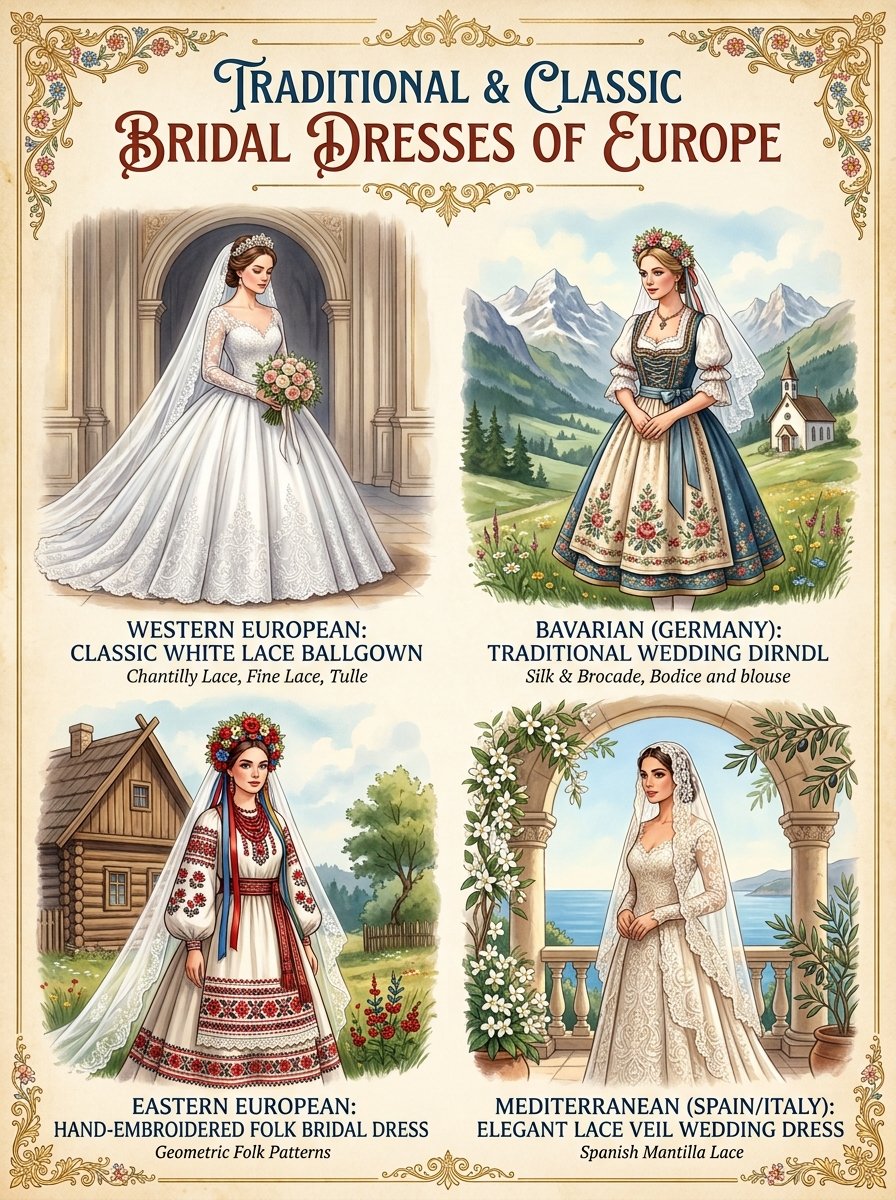
Bridal Dresses of Europe
Europe offers everything from folk costumes to couture lace.
- Tartan Bridal Dress (Scotland): A plaid sash or skirt celebrating clan heritage.
- Dirndl Wedding Dress (Germany/Austria): A fitted bodice, apron, and full skirt.
- Polish Folk Wedding Costume: Embroidered vests, flowered crowns, and layered skirts.
- Norwegian Bunad: Regional wool dress with silver brooches and a bridal crown.
- Swedish Folkdräkt: A regional costume with a bodice and decorative apron.
- Greek Goddess Gown: A draped, Grecian-inspired gown with a flowing skirt.
- Burano Lace Gown (Italy): Fine needle lace from the Venetian islands.
- Mantilla Wedding Dress (Spain): Paired with a lace veil draped over a comb.
- Chantilly Lace Gown (France): Delicate, floral lace known for its soft finish.
- Victorian Wedding Dress: Inspired by Queen Victoria’s white gown of 1840.
- Matyó Embroidered Dress (Hungary): Bright, folk floral embroidery.
- Vyshyvanka Wedding Dress (Ukraine): Embroidered cotton or linen with symbolic motifs.
- Romanian Ie Dress: A traditional embroidered blouse styled as a bridal gown.
- Traje à Vianesa (Portugal): A costume with gold filigree jewelry from the Minho region.
- Carrickmacross Lace Gown (Ireland): Appliqué lace with a vintage feel.
- Brussels Lace Gown (Belgium): Intricate, heirloom-style lace.
Bridal Dresses of the Americas
The Americas blend Indigenous, colonial, and contemporary influences.
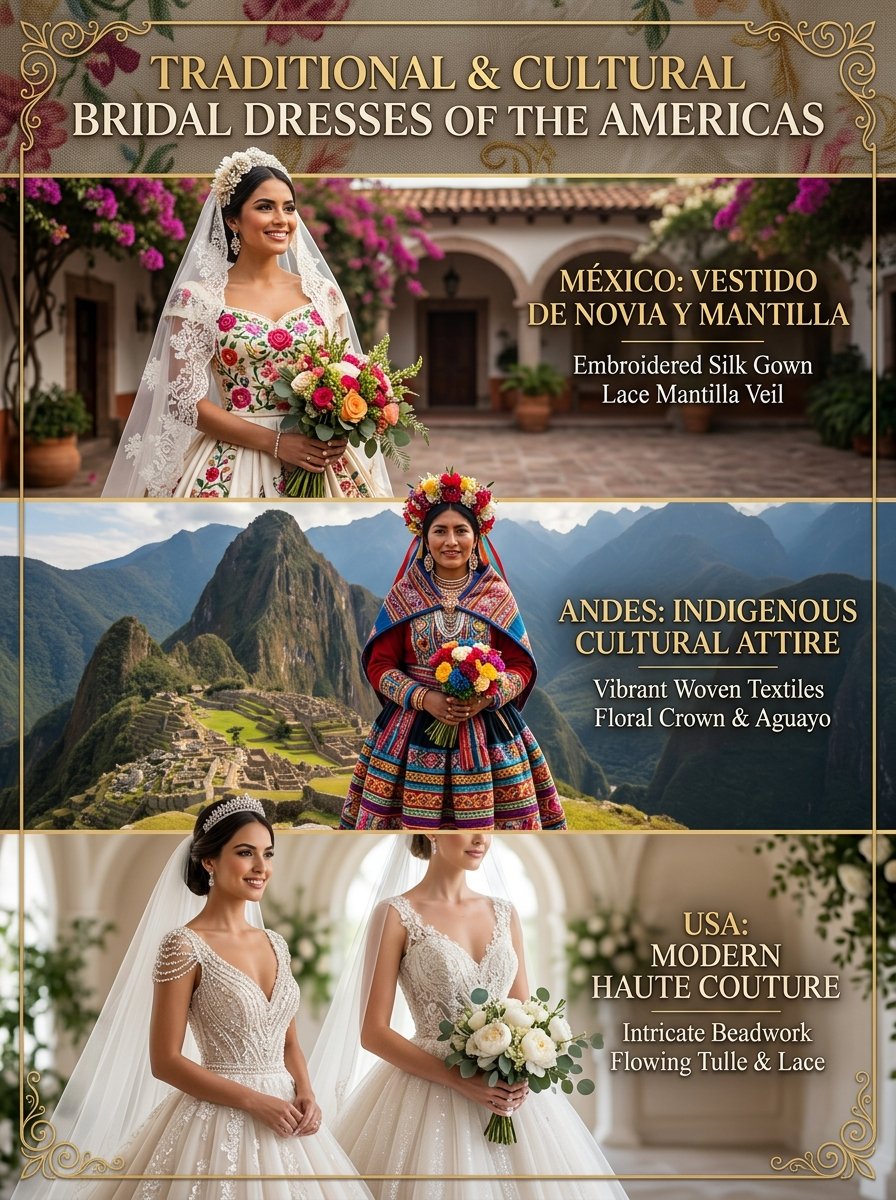
- Mexican Huipil: An embroidered tunic adapted for bridal wear.
- Tehuana Dress (Oaxaca): Floral embroidery with a dramatic lace headdress.
- Chiapas Embroidered Dress: Colorful stitching in regional patterns.
- Pollera Panameña (Panama): Layered skirts with gold jewelry and hair ornaments.
- Guatemalan Traje: A woven, patterned outfit unique to each community.
- Bolivian Pollera: A full, gathered skirt worn with a shawl and hat.
- Beaded Buckskin Dress (Native American): Handcrafted leather with beadwork.
- Creole Madras Gown (Caribbean): Bright madras fabric with a matching head wrap.
- Baiana Dress (Brazil): A full lace skirt and blouse tied to Afro-Brazilian heritage.
- Hoop-Skirt Southern Gown (USA): A romantic, wide-skirted classic.
Bridal Dresses of Central Asia, the Caucasus, and Russia
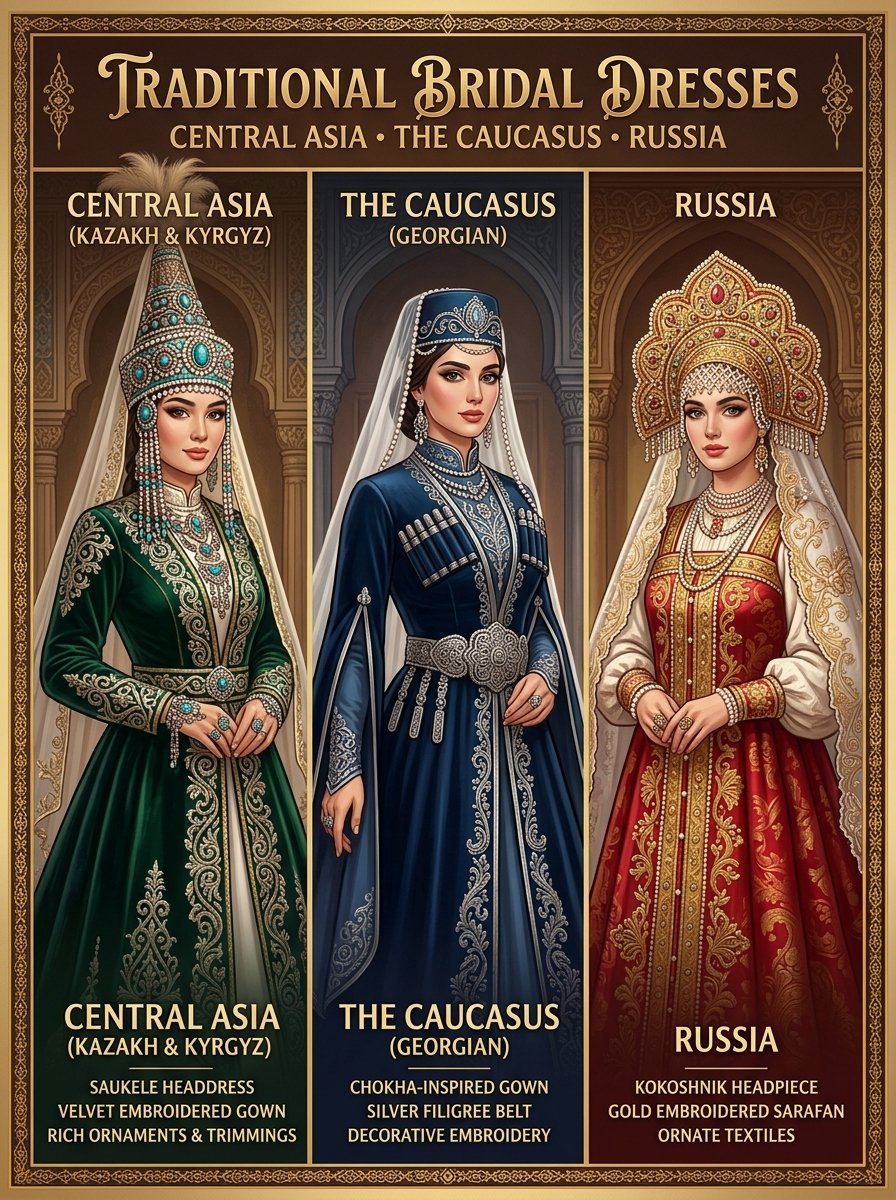
- Uzbek Atlas Dress: Silk with bold, painterly ikat patterns.
- Kazakh Saukele Ensemble: Famous for its tall, jeweled bridal headdress.
- Kyrgyz Elechek Ensemble: A white turban-style headdress with a decorated robe.
- Armenian Taraz: A traditional dress with detailed stitching and a head covering.
- Russian Sarafan: A long, sleeveless dress layered over a blouse.
- Afghan Embroidered Wedding Dress: Mirror work and dense, colorful needlework.
Modern Bridal Dress Silhouettes
These names describe shapes you will see in bridal boutiques worldwide.
- Ball Gown: A fitted bodice and a dramatic full skirt.
- A-Line: A flattering shape that gently widens from the waist.
- Mermaid: Fitted through the hips, flaring at the knee.
- Trumpet: Similar to the mermaid, but flaring higher on the thigh.
- Sheath: A slim, column-style gown with a clean line.
- Empire: A high waist under the bust with a flowing skirt.
- Tea-Length: A skirt that ends mid-calf, great for retro looks.
- Off-Shoulder Gown: Sleeves or a neckline that frames the shoulders.
- Two-Piece Bridal Set: A separate top and skirt with room to mix and match.
- Wedding Jumpsuit: A modern, tailored alternative to a dress.
How to Choose the Right Bridal Outfit
Start with meaning. A bridal dress can honor family heritage, so ask relatives which garments carry stories worth passing on.
Consider the climate. Silk, cotton, and lace breathe well in heat, while velvet and wool suit winter weddings.
Think about movement. You will walk, sit, dance, and hug. Try your outfit in every position before the big day.
Balance tradition and personality. Many brides blend elements, such as a classic lehenga with a modern cut or a Western gown with a traditional veil.
Plan fittings early. Heavily embroidered or handwoven garments can take weeks or months to complete.
Modern Trends in Bridal Fashion
Bridal fashion is increasingly global. Brides are mixing cultures, wearing more than one outfit across their celebrations, and choosing color over traditional white. Sustainable fabrics, heirloom restyling, and rented couture are growing in popularity, and handmade textiles are experiencing a renaissance as couples look for meaning over mass production.
Frequently Asked Questions
What is the most popular bridal dress in the world?
The white A-line and ball gown are widely popular in Western weddings, while the lehenga, saree, and qipao remain iconic in South and East Asia.
Which color do brides wear in different countries?
White is common in Western and Japanese traditions. Red is considered lucky across China, India, and Pakistan. Gold, green, and vibrant multicolor shades appear in many African and Middle Eastern weddings.
Can I wear more than one outfit at my wedding?
Yes. In Morocco, India, and many other cultures, brides change several times to display different traditional styles.
How can I include my cultural heritage in a modern dress?
Add traditional embroidery, a cultural veil, heirloom jewelry, or a fabric such as kente or songket as an accent in a contemporary design.
How do I choose a dress if I belong to two cultures?
Consider two outfits, one for each ceremony, or blend a traditional fabric with a modern silhouette to honor both.
Conclusion
From the Hanbok to the Habesha Kemis, from the Lehenga to the Victorian gown, bridal dresses show how creatively and beautifully people celebrate love around the world. Whether you pick a centuries-old tradition or a modern silhouette, the best wedding outfit is the one that tells your story. We hope these 100 names inspire your next wedding, design, or story.
