

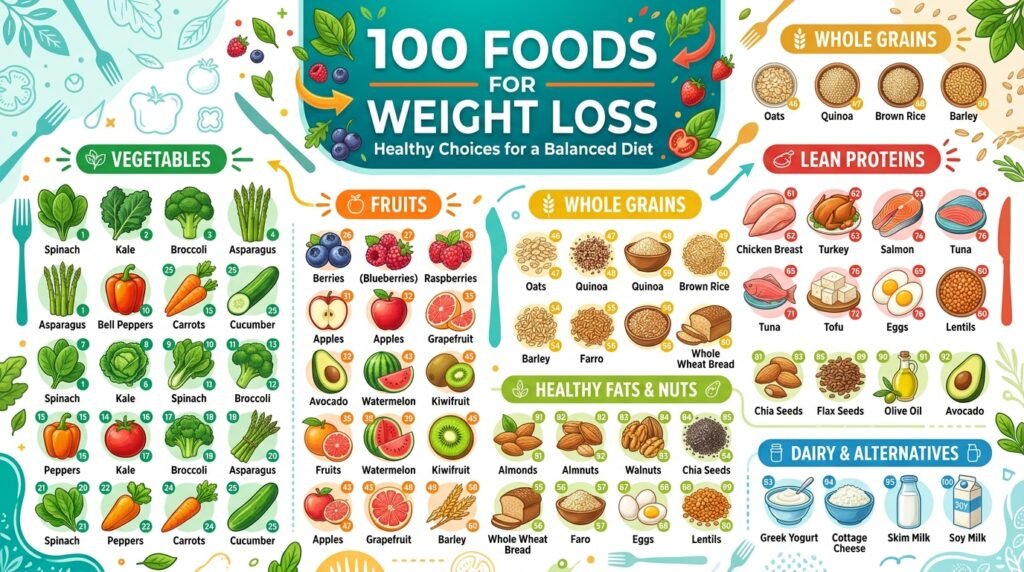
Eating well does not have to be complicated. The secret is knowing which foods give your body the most nutrition for every bite. Whether you want more energy, better digestion, stronger immunity, or simply a balanced plate, the right food choices make a real difference.
In this guide, you will find 100 healthy food names, organized by category, with short notes on why each one deserves a place in your kitchen. Bookmark this list, use it for grocery shopping, meal planning, or to find fresh inspiration for your next meal.
Why Choosing Healthy Foods Matters
Food is fuel, but it also tells your body what it needs. Nutrient-rich foods supply vitamins, minerals, fiber, healthy fats, and protein that support nearly every system in your body.
Key Benefits of a Nutritious Diet
- Steady energy: Whole foods release energy slowly, helping you avoid sudden crashes.
- Better digestion: Fiber-rich foods support a healthy gut.
- Stronger immunity: Vitamins C, D, E, zinc, and antioxidants help your body defend itself.
- Heart and brain support: Healthy fats, leafy greens, and whole grains support long-term wellness.
- Weight balance: Filling, nutrient-dense foods help you feel satisfied with fewer empty calories.
Healthy Fruits (Names 1–15)
Fruits are naturally sweet, hydrating, and loaded with vitamins and antioxidants.
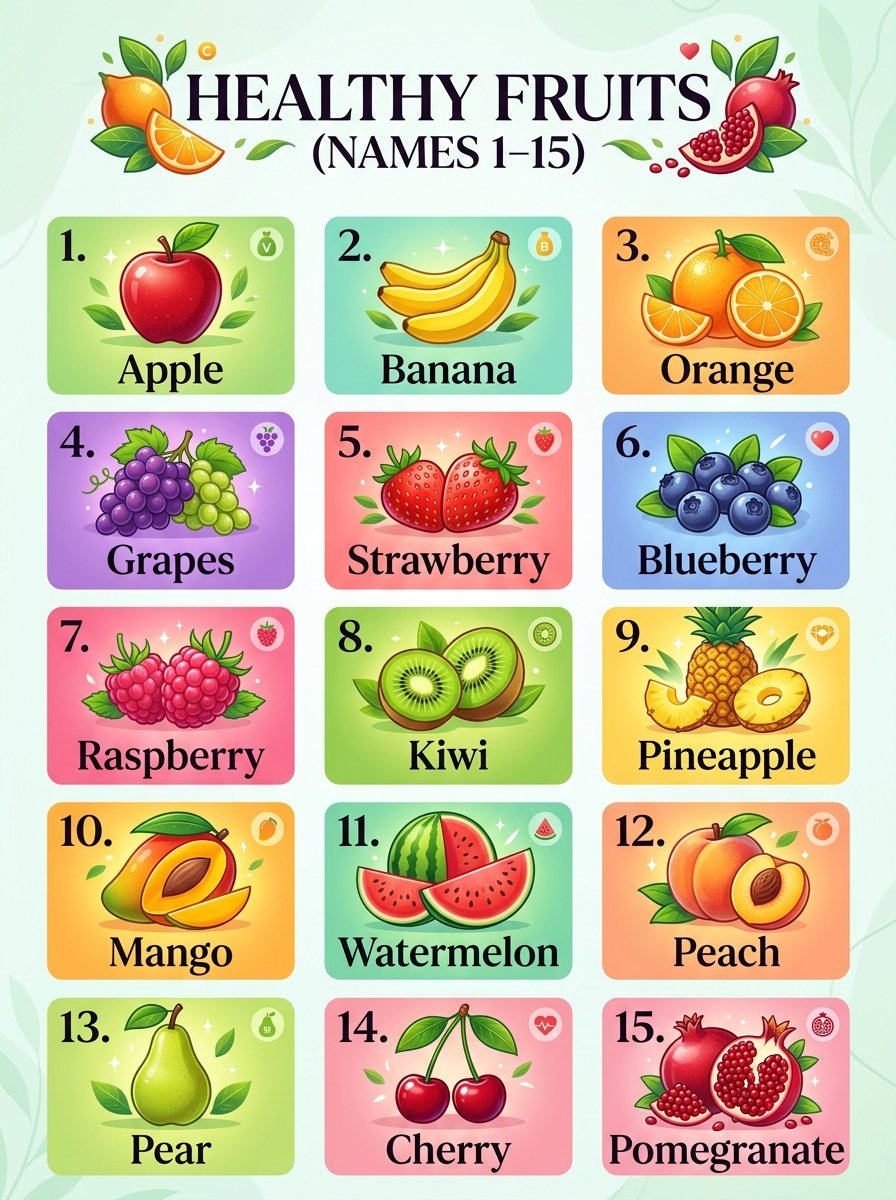
- Apple: Rich in fiber and quercetin; great as a portable snack.
- Banana: A quick source of potassium and natural energy.
- Blueberries: Packed with antioxidants that support brain health.
- Strawberries: High in vitamin C and low in calories.
- Orange: A classic source of vitamin C and hydration.
- Papaya: Contains digestive enzymes and vitamin A.
- Pomegranate: Full of polyphenols and refreshing seeds.
- Kiwi: One of the richest fruit sources of vitamin C.
- Guava: High in fiber, vitamin C, and lycopene.
- Watermelon: Over 90% water, perfect for hot days.
- Pineapple: Contains bromelain, an enzyme that aids digestion.
- Mango: Provides vitamins A and C in a delicious package.
- Avocado: Creamy, with heart-friendly monounsaturated fats.
- Pear: A fiber-rich fruit that is gentle on the stomach.
- Grapes: Contain resveratrol and natural hydration.
Nutritious Vegetables (Names 16–35)
Vegetables are the foundation of a balanced plate, offering color, crunch, and plenty of nutrients.
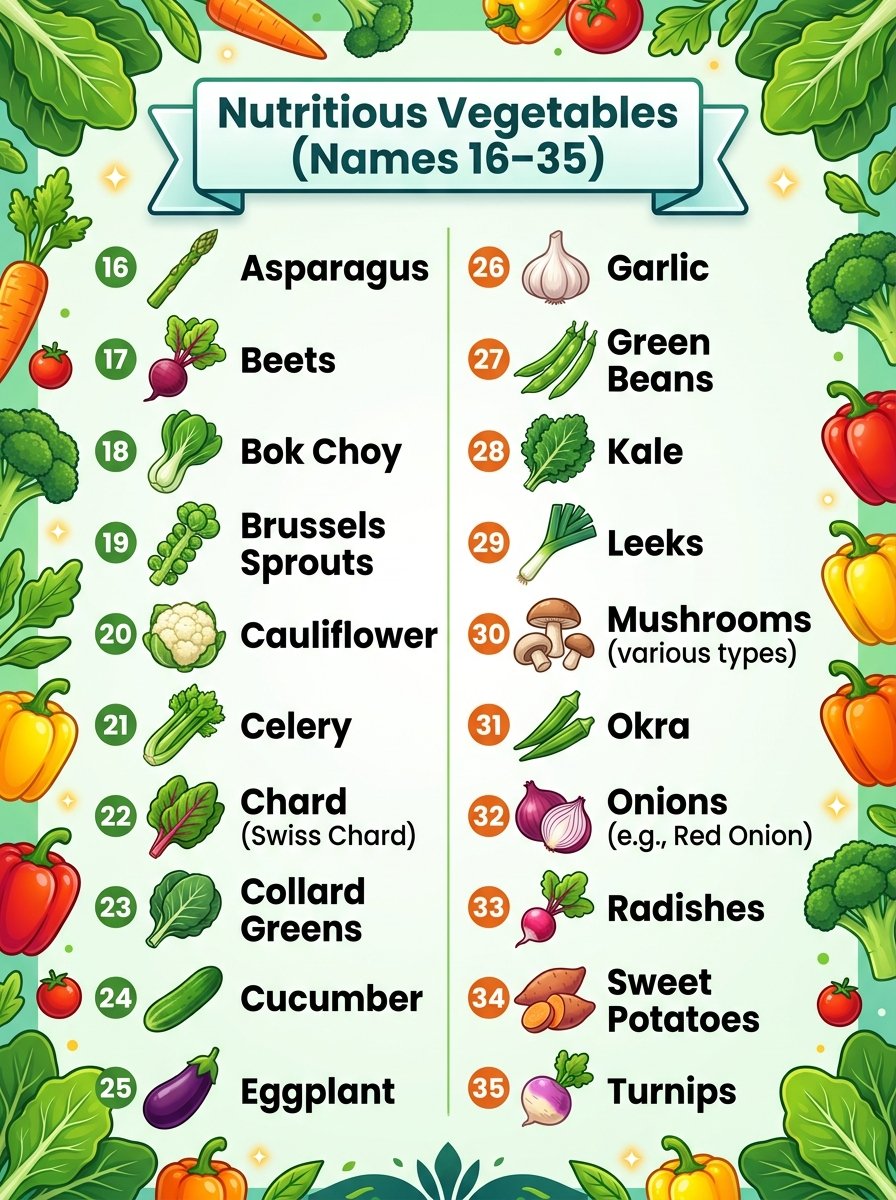
- Spinach: Iron, folate, and vitamin K in leafy form.
- Broccoli: A powerhouse of fiber and vitamin C.
- Carrot: Rich in beta-carotene for eye health.
- Kale: A dense source of calcium and antioxidants.
- Sweet Potato: Slow-digesting carbs with plenty of vitamin A.
- Beetroot: Supports stamina and blood flow.
- Cauliflower: Low-carb, versatile, and rich in vitamin C.
- Cabbage: Budget-friendly and excellent for gut health.
- Bell Pepper: More vitamin C than many citrus fruits.
- Tomato: A good source of lycopene and potassium.
- Cucumber: Cooling, hydrating, and refreshing.
- Zucchini: Light, low in calories, and easy to cook.
- Pumpkin: Fiber and beta-carotene in a comforting form.
- Green Peas: Plant protein with fiber and vitamin K.
- Okra (Lady Finger): Soluble fiber that supports digestion.
- Bottle Gourd: Light on the stomach and very hydrating.
- Bitter Gourd: Traditionally valued for its bitter compounds.
- Fenugreek Leaves: Fragrant greens rich in iron.
- Asparagus: Folate-rich and gentle on digestion.
- Brussels Sprouts: Fiber, vitamin C, and vitamin K.
Whole Grains and Cereals (Names 36–48)
Whole grains keep their bran and germ, so they deliver more fiber and nutrients than refined versions.
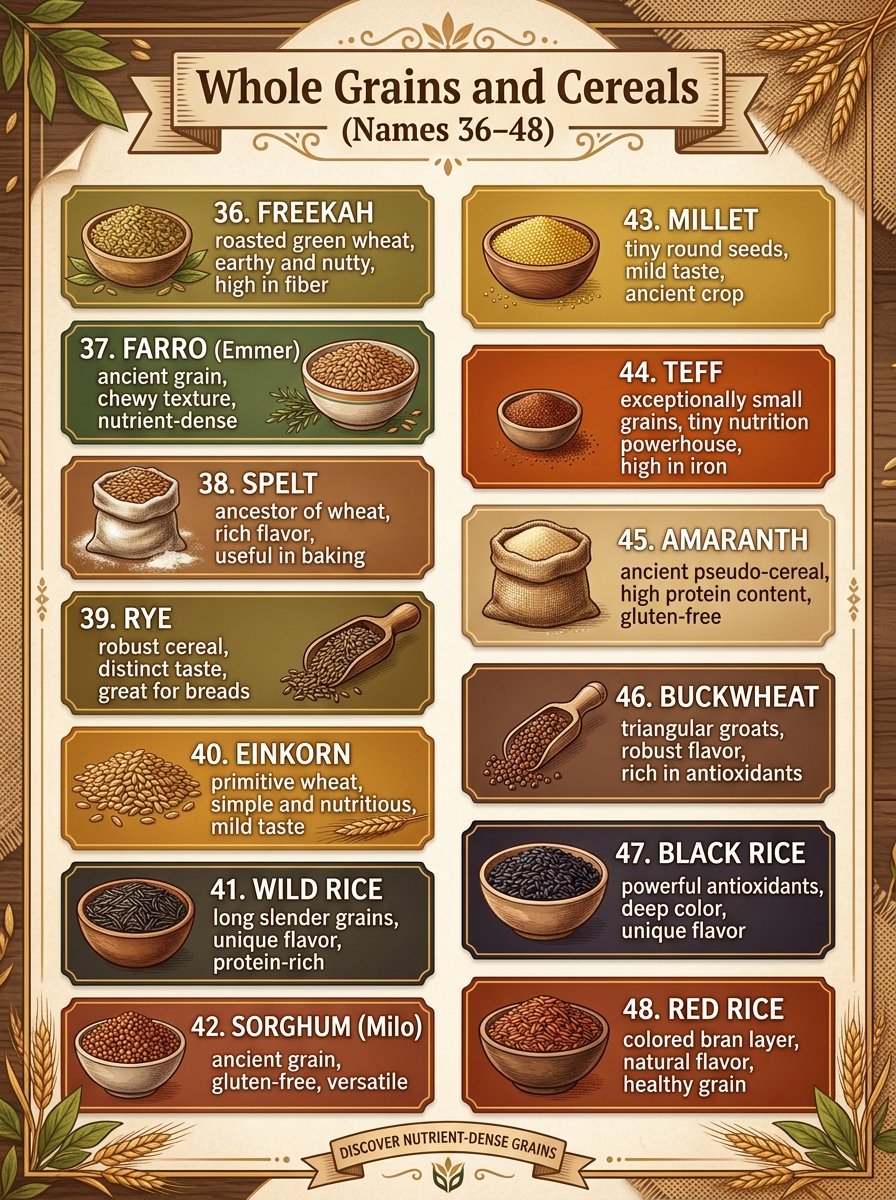
- Oats: Contain beta-glucan, a fiber that supports heart health.
- Brown Rice: A fiber-rich alternative to white rice.
- Quinoa: A complete plant protein with all essential amino acids.
- Barley: Chewy, filling, and high in fiber.
- Whole Wheat Flour (Atta): A staple for nutritious flatbreads.
- Millet: Gluten-free and rich in minerals.
- Buckwheat: Naturally gluten-free with good protein.
- Bulgur: Quick-cooking cracked wheat with plenty of fiber.
- Sorghum (Jowar): Gluten-free and rich in antioxidants.
- Pearl Millet (Bajra): Warming, iron-rich grain.
- Finger Millet (Ragi): One of the best plant sources of calcium.
- Whole Grain Bread: A better sandwich base than refined bread.
- Popcorn (Air-Popped): A whole-grain snack when prepared simply.
Lean Proteins (Names 49–62)
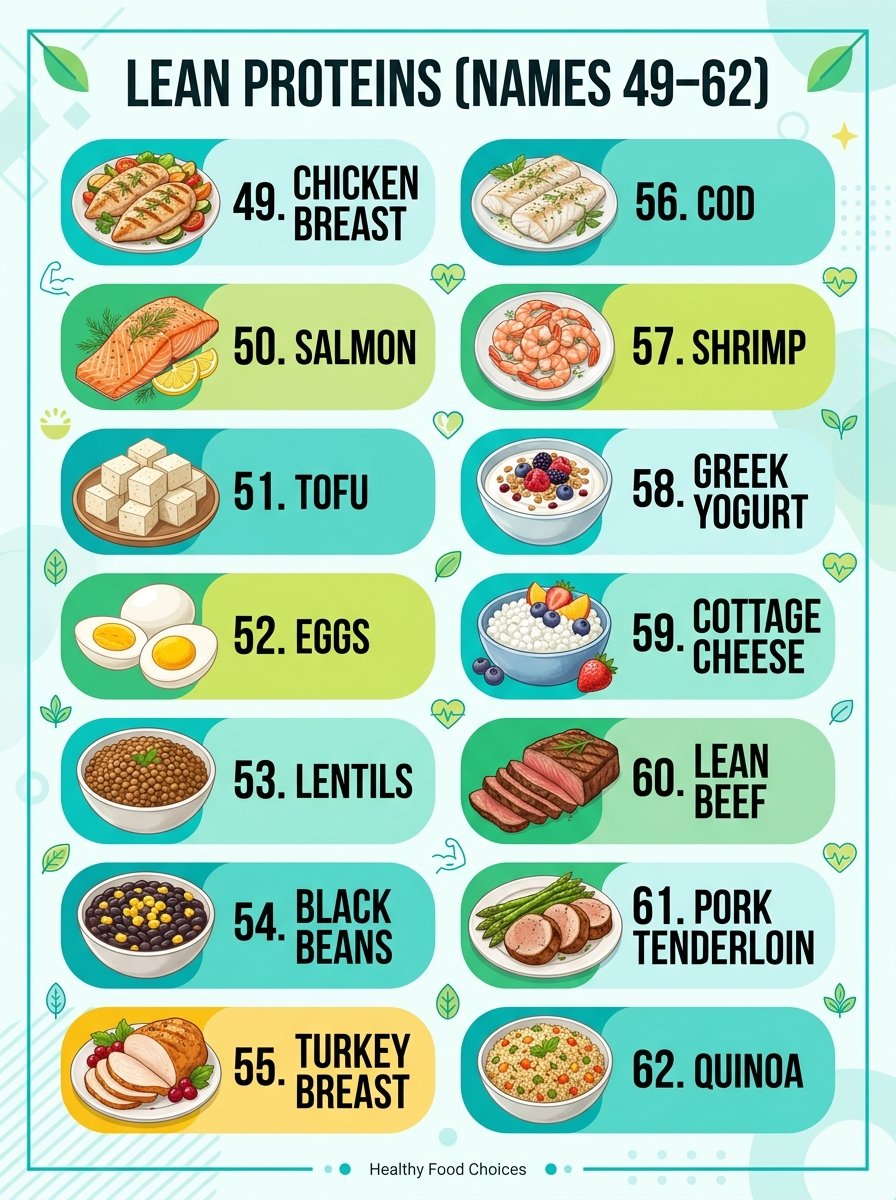
Protein supports muscle repair, hormones, and long-lasting fullness.
- Eggs: A budget-friendly source of complete protein.
- Chicken Breast: Lean, versatile, and high in protein.
- Fish (Salmon): Rich in omega-3 fatty acids.
- Sardines: Small fish with big nutrition, including calcium.
- Tuna: High-protein and convenient.
- Turkey: A lean alternative to red meat.
- Lean Mutton or Beef (in moderation): Provides iron and B12.
- Prawns: Low-fat protein with selenium.
- Greek Yogurt: Thick, creamy, and protein-rich.
- Cottage Cheese (Paneer): Protein and calcium for vegetarians.
- Tofu: Plant-based protein that absorbs any flavor.
- Tempeh: Fermented soy with good protein and probiotics.
- Milk: Calcium, protein, and vitamin D (when fortified).
- Whey or Plant Protein (Natural, Unsweetened): A convenient boost when needed.
Legumes and Pulses (Names 63–72)
Legumes are inexpensive, filling, and packed with fiber and plant protein.
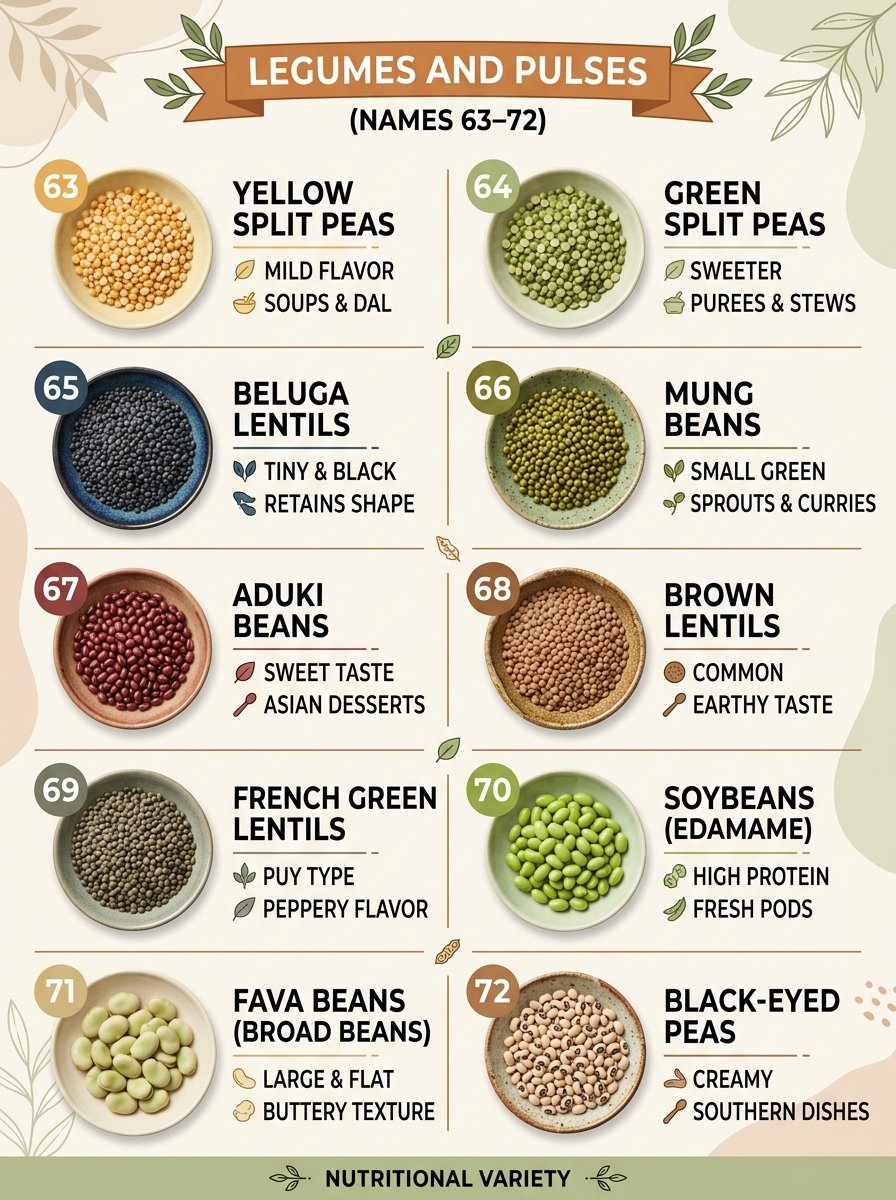
- Lentils (Masoor Dal): Quick-cooking and iron-rich.
- Chickpeas (Chana): Great for salads, curries, and hummus.
- Kidney Beans (Rajma): Hearty and rich in fiber.
- Black Beans: Full of antioxidants and protein.
- Mung Beans (Moong Dal): Light and easy to digest.
- Black Gram (Urad Dal): Protein-rich and filling.
- Pigeon Peas (Arhar Dal): A staple source of everyday protein.
- Soybeans: A complete plant protein.
- Split Peas: Smooth in soups and high in fiber.
- Black-Eyed Peas (Lobia): Mild, nutritious, and folate-rich.
Nuts and Seeds (Names 73–84)
Nuts and seeds offer healthy fats, minerals, and satisfying crunch. Enjoy them in small portions.
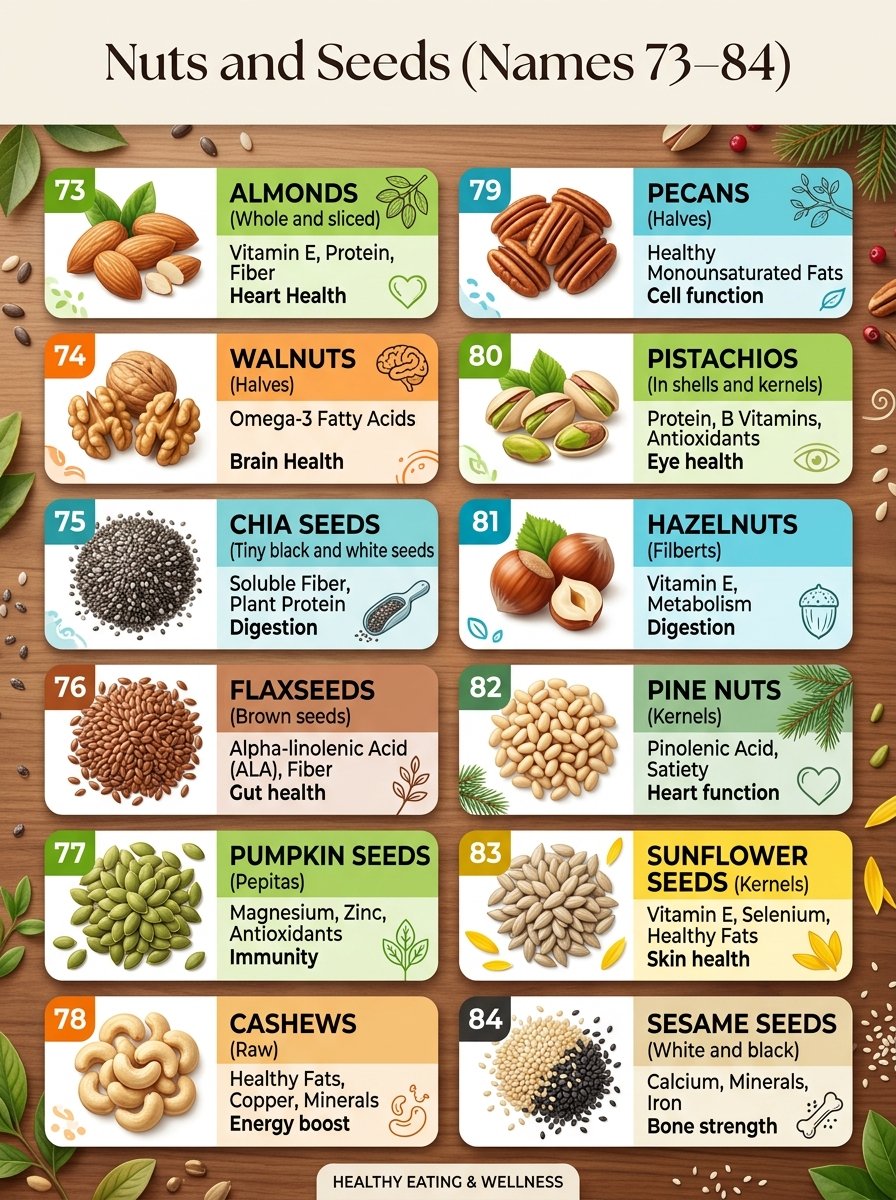
- Almonds: Vitamin E and healthy fats.
- Walnuts: A plant source of omega-3 fatty acids.
- Pistachios: Protein-rich and great for snacking.
- Cashews: Creamy and rich in magnesium.
- Peanuts: Affordable protein and healthy fats.
- Flaxseeds: Fiber and plant omega-3s; best eaten ground.
- Chia Seeds: Absorb liquid and add fiber to puddings and smoothies.
- Sunflower Seeds: Vitamin E and selenium.
- Pumpkin Seeds: A good source of zinc and magnesium.
- Sesame Seeds: Calcium-rich and aromatic.
- Hemp Seeds: Protein and balanced fatty acids.
- Dried Dates: A natural sweet with fiber and potassium.
Healthy Fats, Dairy, and Everyday Essentials (Names 85–93)
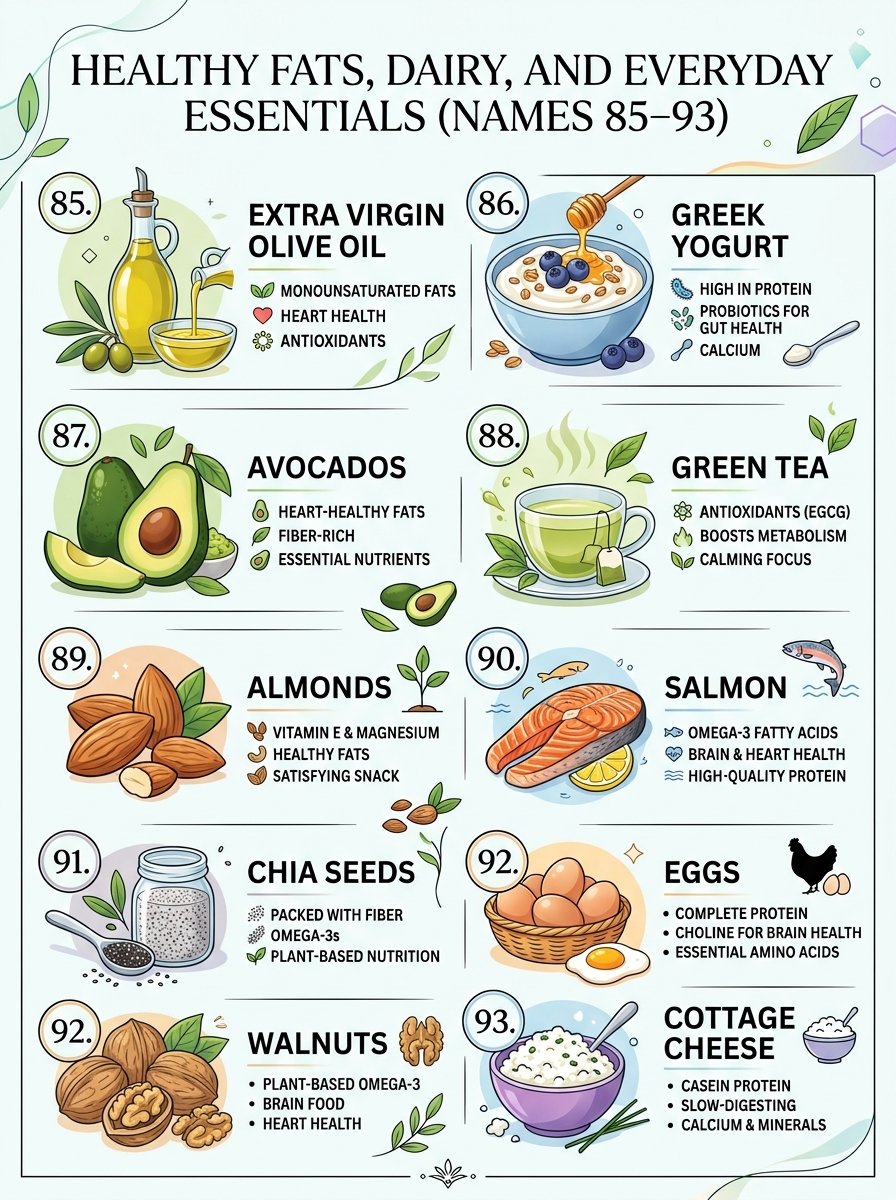
- Extra Virgin Olive Oil: A heart-friendly cooking and dressing oil.
- Mustard Oil (Moderate Use): A traditional cooking oil in many regions.
- Desi Ghee (Small Amounts): Rich flavor; best used sparingly.
- Yogurt (Dahi): Probiotic-rich and good for digestion.
- Buttermilk (Lassi/Chaas): A light, cooling, gut-friendly drink.
- Kefir: Fermented milk with diverse probiotics.
- Coconut: Provides fiber and medium-chain fats.
- Dark Chocolate (70% or higher): Antioxidants in small treats.
- Honey (Raw, Moderate): A natural sweetener to use in small amounts.
Herbs, Spices, and Superfoods (Names 94–100)
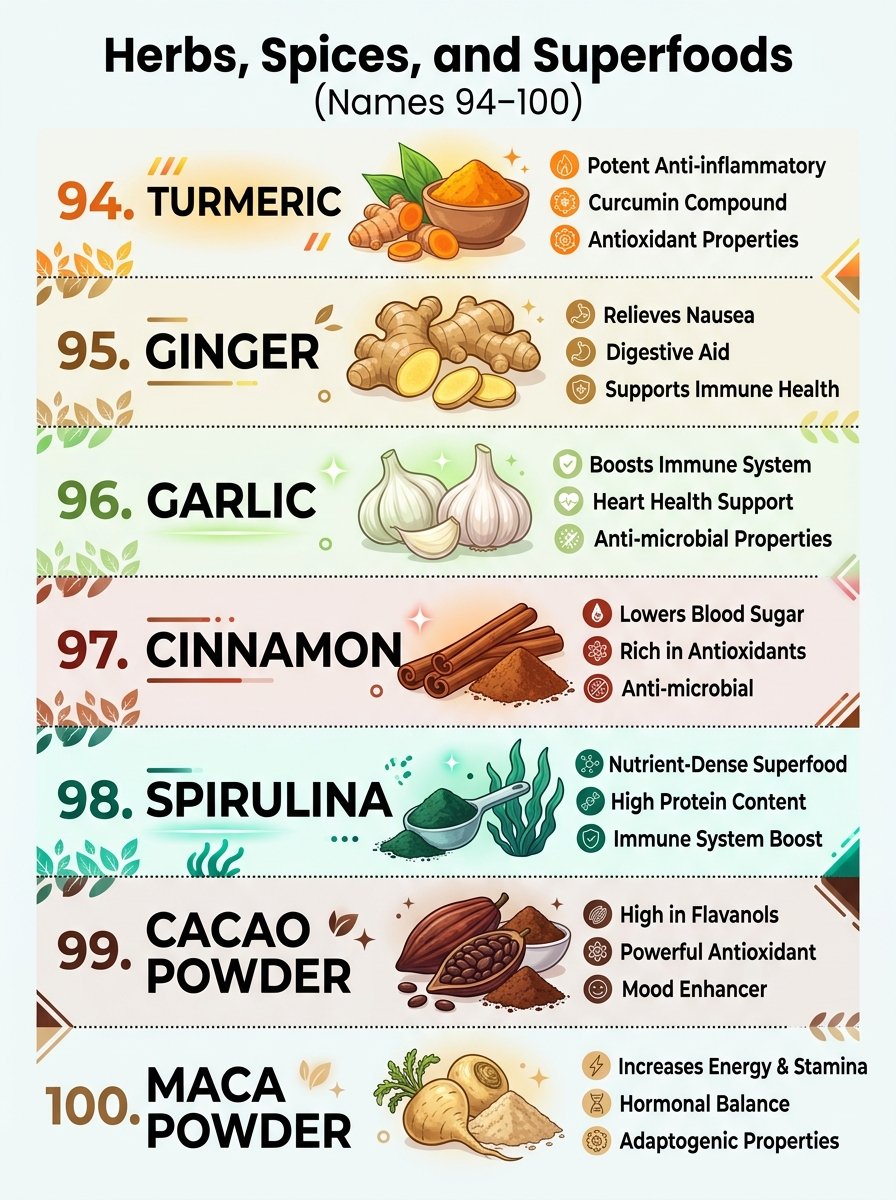
- Turmeric: Contains curcumin, valued for its anti-inflammatory properties.
- Ginger: Soothing for the stomach and wonderful in teas.
- Garlic: Adds flavor and supports heart health.
- Cinnamon: Adds natural sweetness without sugar.
- Green Tea: Light caffeine with catechin antioxidants.
- Mint: Refreshing and great for digestion.
- Moringa: A nutrient-dense leaf powder and traditional superfood.
Quick Reference Table: Top Healthy Foods and Their Key Benefits
| Food | Category | Main Benefit |
|---|---|---|
| Spinach | Vegetable | Iron and vitamin K |
| Blueberries | Fruit | Antioxidants for brain health |
| Oats | Whole Grain | Heart-friendly fiber |
| Salmon | Protein | Omega-3 fatty acids |
| Lentils | Legume | Plant protein and iron |
| Almonds | Nut | Vitamin E and healthy fats |
| Greek Yogurt | Dairy | Protein and probiotics |
| Chia Seeds | Seed | Fiber and omega-3s |
| Sweet Potato | Vegetable | Beta-carotene and slow energy |
| Turmeric | Spice | Anti-inflammatory compounds |
How to Build a Healthy Plate Using These Foods
You do not need to eat all 100 foods. Instead, aim for variety across the week.
A Simple Plate Formula
- Half the plate: Vegetables and fruits in different colors.
- One quarter: Whole grains such as oats, brown rice, or millet.
- One quarter: Lean protein such as eggs, fish, chicken, or pulses.
- A small extra: A spoon of healthy fat like olive oil, nuts, or seeds.
Easy Daily Ideas
- Breakfast: Oats with banana, chia seeds, and walnuts.
- Lunch: Lentil curry with brown rice and a cucumber-tomato salad.
- Snack: Greek yogurt with berries or a handful of almonds.
- Dinner: Grilled fish or paneer with sautéed vegetables and whole wheat roti.
Practical Tips for Eating Healthier
- Shop the outer aisles first. Fresh produce, dairy, and proteins usually sit there.
- Read labels. Choose products with short ingredient lists and less added sugar.
- Cook at home more often. You control the oil, salt, and portions.
- Eat seasonal foods. They are fresher, tastier, and often cheaper.
- Drink enough water. Hydration supports digestion and energy.
- Practice portion awareness. Even healthy foods like nuts and ghee are best in moderation.
- Make small changes. Swap one refined item at a time instead of overhauling everything overnight.
Frequently Asked Questions (FAQs)
What are the healthiest foods to eat every day?
Leafy greens, seasonal fruits, whole grains, eggs or pulses, yogurt, and a small handful of nuts are excellent daily choices.
Which food is considered the most nutritious?
No single food is perfect. Nutrient-dense options like spinach, salmon, lentils, berries, and nuts are often highlighted, but variety matters most.
Are fruits healthy even though they contain sugar?
Yes. Whole fruits contain natural sugar along with fiber, water, vitamins, and antioxidants, which makes them very different from sugary drinks and sweets.
How can I eat healthy on a budget?
Focus on lentils, chickpeas, oats, eggs, seasonal vegetables, bananas, and cabbage. These are affordable and highly nutritious.
Are healthy foods good for weight management?
Fiber- and protein-rich foods keep you full longer, which can help manage appetite. Portion size and overall lifestyle still matter.
Can vegetarians get enough protein from these foods?
Yes. Pulses, tofu, paneer, yogurt, quinoa, nuts, and seeds provide plenty of protein when eaten in variety.
Should I consult a professional before changing my diet?
If you have a medical condition, allergy, or special dietary needs, it is wise to speak with a doctor or registered dietitian first.
Conclusion
Healthy eating is built on simple, consistent choices. With these 100 healthy food names, you now have a ready list of nutritious fruits, vegetables, grains, proteins, legumes, nuts, seeds, and superfoods to build balanced meals that taste good and support your well-being.
