

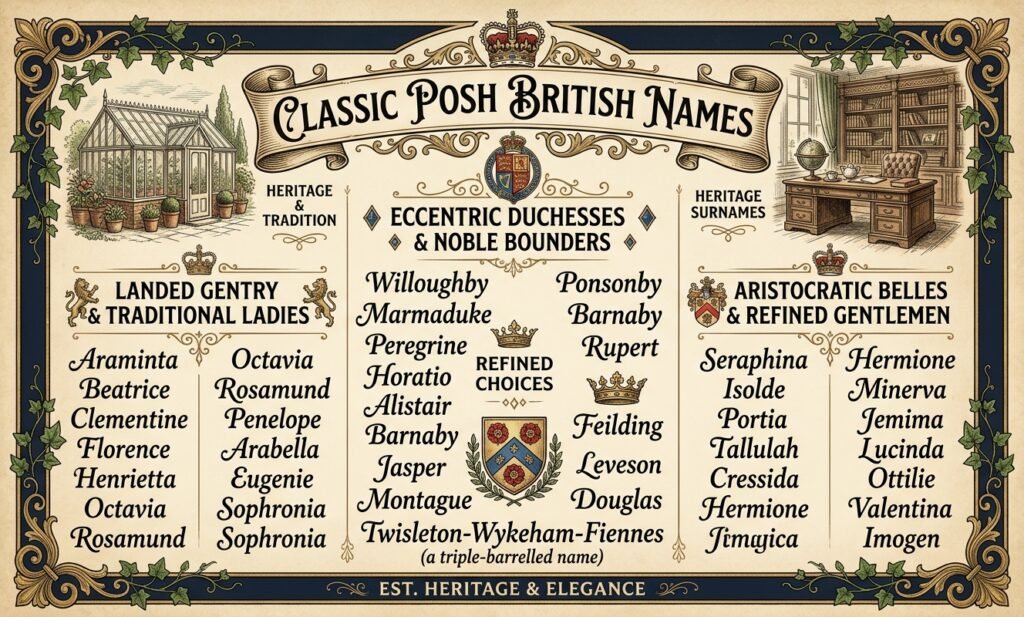
While trendy baby names come and go, classic posh British names have stood the test of time. Rooted in centuries of aristocratic tradition, country estates, and royal lineage, these names carry an air of elegance that modern trends simply can’t replicate. Whether you’re researching British naming heritage, looking for baby name inspiration, or curious about what makes a name feel truly “old money,” this guide covers the most enduring classic posh names in the UK.
What Defines a “Classic” Posh Name?
Unlike trendy posh names that rise and fall in popularity, classic posh names share these traits:
- Multi-generational use within aristocratic and landed-gentry families
- Strong ties to British history, literature, and royalty
- Formal, dignified sound — often shortened to affectionate nicknames in private
- Association with institutions like Eton, Oxbridge, and the Home Counties
- Longevity — these names were posh a century ago and remain posh today
These are the names you’d expect to find etched on a family portrait in a countryside manor, passed down through generations without ever feeling dated.
Classic Posh British Boys’ Names
- Edward
- Henry
- Charles
- William
- George
- Alexander
- Frederick
- Nicholas
- Jonathan
- Rupert
These names are staples of British royal and aristocratic naming traditions, many shared by generations of monarchs and nobility alike.
Classic Posh British Girls’ Names
- Elizabeth
- Charlotte
- Victoria
- Eleanor
- Margaret
- Alice
- Beatrice
- Isabella
- Camilla
- Diana
Rooted in royal history, these names feel timeless precisely because they’ve never gone out of fashion among Britain’s upper classes.
Classic Posh Surnames That Signal Old Money
Certain surnames are instantly recognisable as belonging to Britain’s traditional upper class:
- Windsor-Clive
- Fitzwilliam
- Cavendish
- Montagu
- Beauchamp (pronounced “Beecham”)
- Grosvenor
- Pelham
- Wyndham
These surnames often trace back to noble titles, landed estates, or centuries-old family lines — many still linked to peerages today.
Nicknames: The Secret Posh Code
A distinctive feature of classic posh naming culture is the use of affectionate nicknames that seem to bear little resemblance to the formal name:
- Charles → Charlie or Chas
- Elizabeth → Lizzie, Liza, or Bess
- Margaret → Daisy or Peggy
- Henry → Harry
- Victoria → Vicky or Tor
Knowing these nicknames — and using them naturally — is often seen as a subtle marker of belonging to that social world.
Why Classic Posh Names Never Go Out of Style
Unlike fleeting baby name trends, classic posh names endure because they’re tied to:
- Royal continuity — new royal babies often revive interest in traditional names
- Heritage branding — private schools, family businesses, and estates favour timeless names
- Cultural prestige — these names appear consistently in British period dramas and literature, reinforcing their association with sophistication
FAQs About Classic Posh British Names
What are the most classic posh British names?
Names like Edward, Charlotte, Henry, and Elizabeth are considered classic posh names due to their long-standing use among British royalty and aristocracy.
Why do posh British names have unusual nicknames?
This tradition dates back generations within upper-class families, where informal nicknames were used privately while formal names were reserved for official occasions.
Are classic posh names still popular in the UK today?
Yes — many classic posh names remain consistently popular, partly due to their royal associations and timeless appeal.
Conclusion
Classic posh British names offer something modern trends can’t: proven staying power. Rooted in royal history and centuries of tradition, names like Edward, Charlotte, and Fitzwilliam continue to represent the enduring elegance of British aristocratic culture.
